EE Cool Project on District Cooling Systems
The Challenge
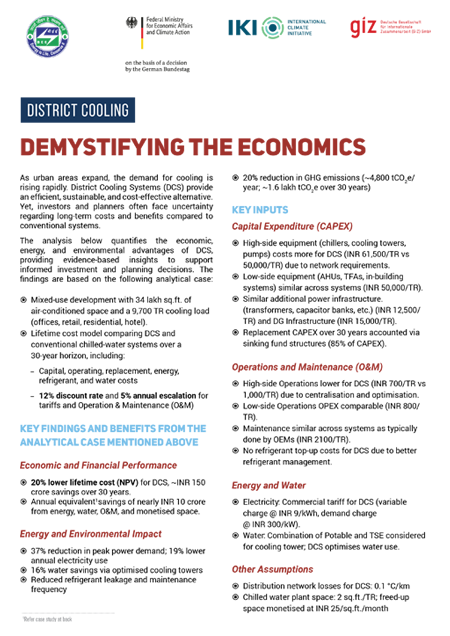
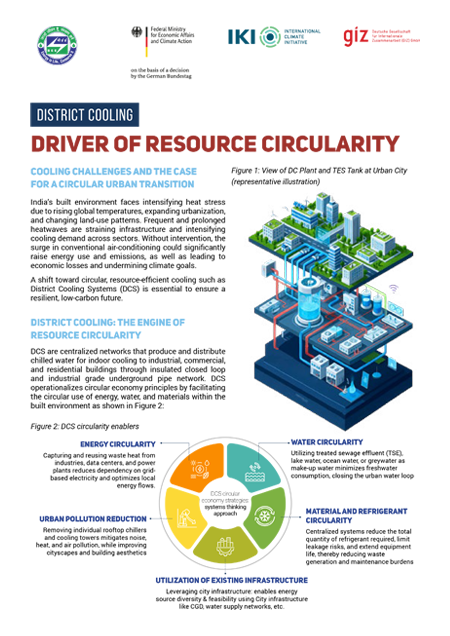
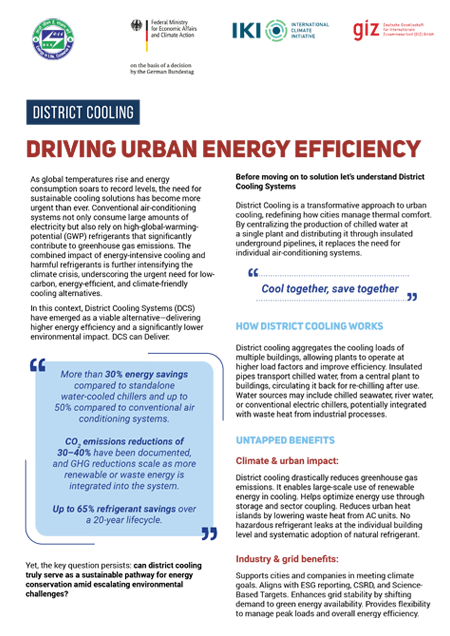
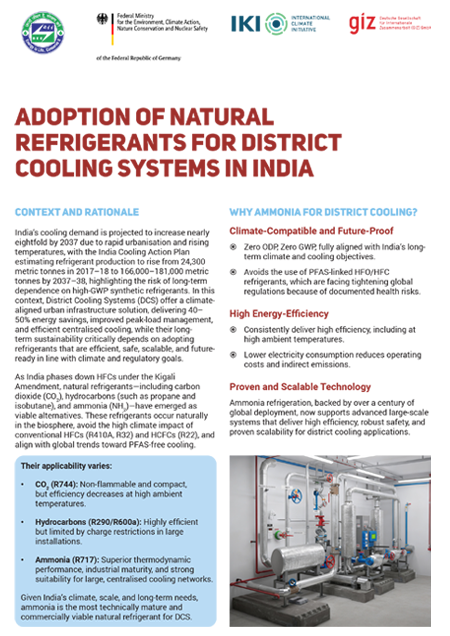
India’s cooling demand is projected to grow nearly eleven-fold by 2037–38, placing increasing pressure on energy systems and urban infrastructure. While District Cooling Systems (DCS) offer a scalable and efficient solution, the sector has historically faced regulatory ambiguity, limited market confidence, and low institutional capacity.
From Concept to Implementation
The Indo-German Energy Efficient Cooling (EE-Cool) project has played a catalytic role in moving DCS in India from a nascent concept to an implementation-ready infrastructure sector.
Implemented by the Deutsche Gesellschaft für Internationale Zusammenarbeit (GIZ) GmbH, with support from AEEE, on behalf of the German Federal Ministry for the Environment, Climate Action, Nature Conservation and Nuclear Safety (BMUKN) under the International Climate Initiative (IKI), and the Bureau of Energy Efficiency (BEE), the project has supported the advancement of the India Cooling Action Plan (ICAP).
It has enabled the formal recognition of DCS within national frameworks, including the Draft National Building Code 2025, and has strengthened the ecosystem through capacity building and stakeholder engagement.
The project has trained over 1,000 professionals and engaged more than 50 organisations, contributing to a growing project pipeline and increased market participation. This has supported a shift towards scalable, utility-based models and service-led approaches, positioning DCS for wider adoption across Indian cities.
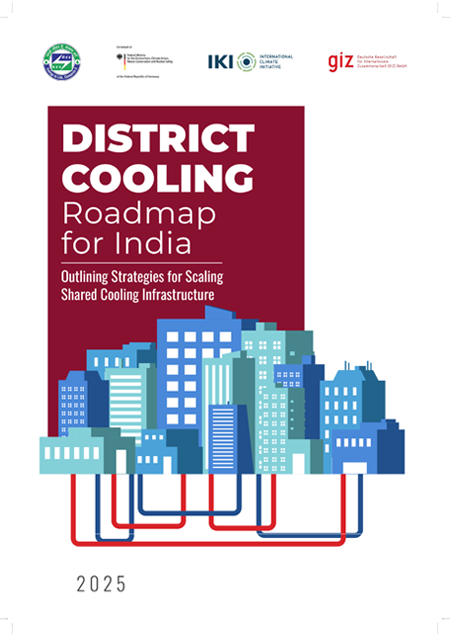
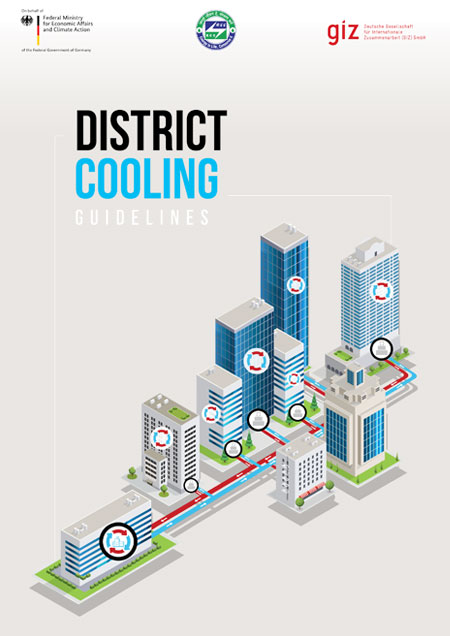
Explore key outputs from the project
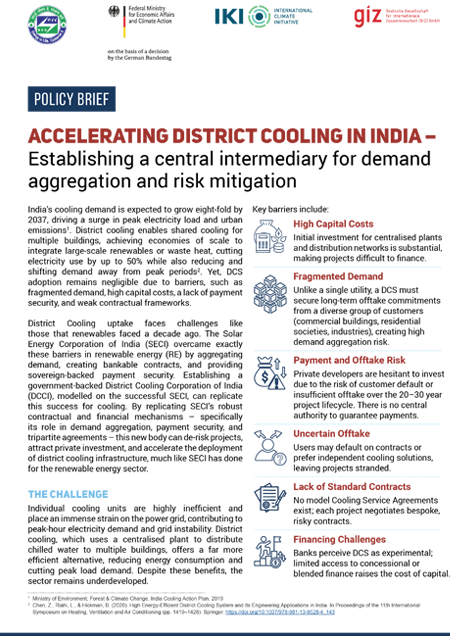
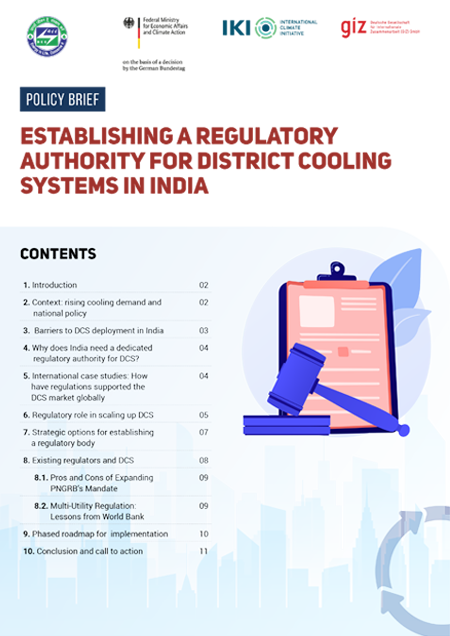
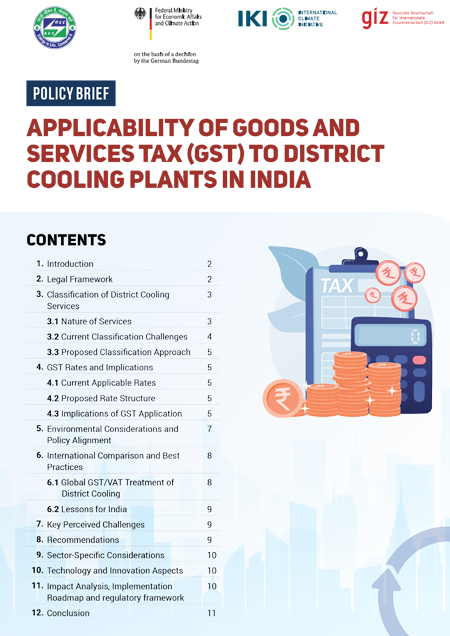
Policy Briefs
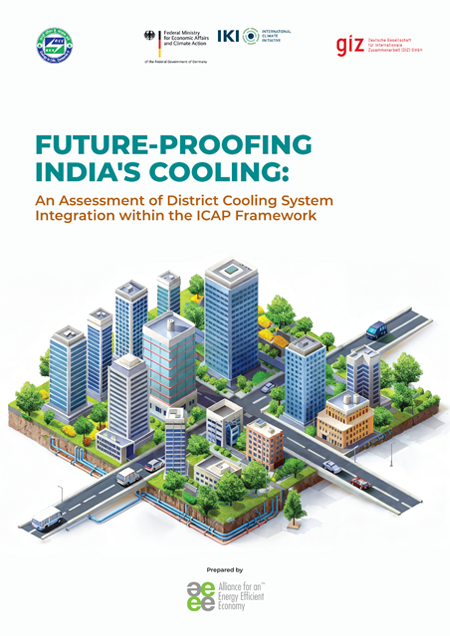
Reports
Factsheets