Agriculture sector serves as the backbone of India’s economy, playing a pivotal role in ensuring food security, sustaining rural livelihoods and contributing to overall economic development. India is among the leading agricultural producers in the world and ranks 2nd in terms of fruits and vegetables globally. [1] The Economic Survey states that the Indian agriculture sector has a share of 18.2% in the country’s GDP, highlighting its significant contribution to the national economy. [2]
But at the same time, high post-harvest losses in the supply chain continue to be of a significant concern which in turn is driven by a persistent and self-reinforcing challenge: inadequate post-harvest infrastructure. In 2021-2022, the total vegetables and fruit loss in India was around 19.3 million tonnes with Bihar alone accounting for approximately 1.49 million tonnes at post-harvest stage. [3] These inefficiencies result in substantial economic losses, the burden of which is disproportionately borne by farmers and their households. The Ministry of Statistics and Programme Implementation (MoSPI), in its latest survey (2018-19), reported that Bihar’s average monthly income per agricultural household was Rs.7,542, among the lowest in the country, further reinforcing a systemic cycle of low productivity and vulnerability. [4] Additionally, the Public Labour Force Survey (PLFS) 2023-2024 data highlighted that agricultural worker share is 46.1% in India, making these losses particularly detrimental to a significant proportion of the population. [5]
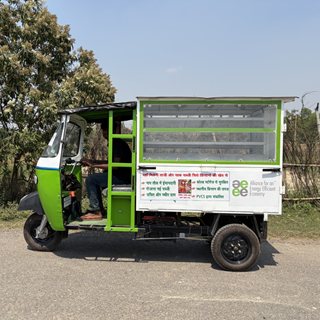
To address this situation, an initiative was undertaken by AEEE in collaboration with the Mithila Vegetable Union at the Singhwara Primary Vegetable Cooperative Society (PVCS) facility, a block-level society that brings together vegetable farmers, in Bihar. [6] As part of this effort, a pilot project was launched deploying a refrigerated e-cart to support farmers by leveraging existing cold chain infrastructure and reducing post-harvest losses.
To depict the real ground-level scenario a systems perspective is adopted to better illustrate the pre-pilot and post-pilot situation and how it can scale up in the near future. The intervention aims to strengthen post-harvest supply chain management, thereby minimising wastage, while also reducing overall emissions by shifting to greener mobility options. Using systems thinking, the analysis identifies key reinforcing (R) and balancing (B) feedback loops. Reinforcing loops amplify change and drive growth or decline, while balancing loops stabilize the system. The link polarities are denoted as (s) for same-direction change and (o) for opposite-direction change. This approach highlights the pathways through which the intervention can break existing inefficiencies and enable sustainable improvements in the post-harvest management.
Stuck in the Loss Trap
At the core of this system lies a reinforcing loop (R1) (see Figure 1). Limited post-harvest infrastructure leads to higher post-harvest losses, as produce cannot be preserved or transported efficiently. This relationship is inverse (o), meaning that as infrastructure decreases, losses increase. Elevated losses, in turn, reduce the effective quantity and quality of produce reaching markets, which lowers the income of marginal farmers (o). With reduced income, farmers and local ecosystems have less capacity to invest in infrastructure improvements (s), further weakening the system. Over time, this loop reinforces itself, locking farmers into a cycle of low productivity and low returns.
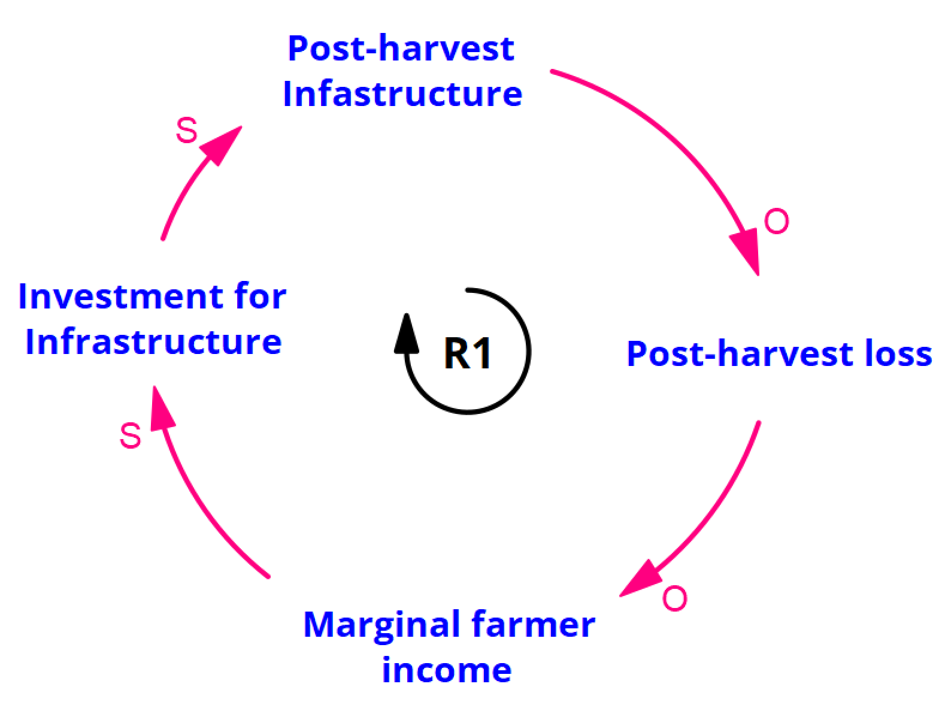 Figure 1. System Trap: Reinforcing Dynamics of Post-Harvest Losses and Low Farmer Income
Breaking the Cycle
To disrupt these reinforcing negative dynamics, a pilot intervention has been introduced in Bihar: the adoption of refrigerated e-cart vehicles. This solution is not merely a technological upgrade but a systemic lever that activates multiple positive feedback loops across the agricultural value chain.
This refrigerated e-cart model operates around 80–100 km on a single charge, strengthening market linkages through integration with cold rooms. These e-carts are equipped with phase change material (PCM) based cooling boxes that maintain low temperatures without continuous power by storing and releasing thermal energy, thereby preserving produce quality during transit.
Earlier, farmers often had to make distress sales of their produce to wholesalers or in local markets at lower prices to avoid spoilage and recover at least some value, frequently incurring losses. With refrigerated e-carts, produce quality is preserved, allowing unsold vegetables to be returned to the cold room and sold the next day without significant deterioration. This extended shelf life reduces wastage, improves price realisation for farmers, and ensures more consistent quality for buyers.
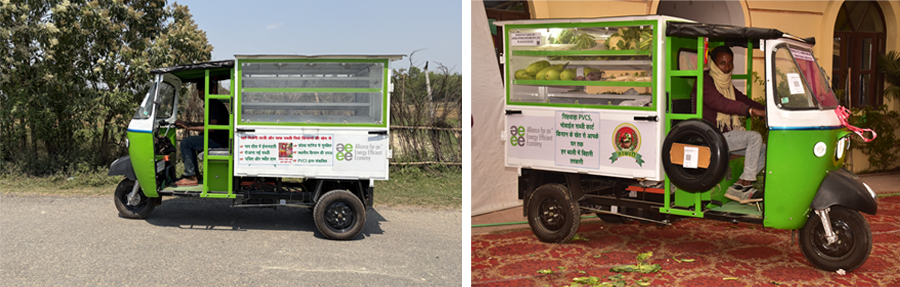 Refrigerated E-Cart Operations in Singhwara and Nearby Villages
First, the adoption of e-carts enables farmers to access distant and higher-value markets highlighted in Figure 2. Improved market access leads to better price realisation (s), which increases farmer income and further enhances their ability to sustain and expand market participation. In this way, (R2) evolves into a strong driver of income growth. Refrigerated e-carts also directly address the issue of perishability. By extending the shelf life of fruits and vegetables, especially high-value cash crops, they reduce post-harvest losses (o), which strengthens loop (R3). This, in turn, weakens the negative effects of (R1) and begins to reverse it.
Beyond economic benefits, the adoption of e-carts also triggers behavioural and policy-level changes. As farmers observe reductions in losses and improvements in income, their confidence and trust in the technology increase (s), encouraging wider adoption.
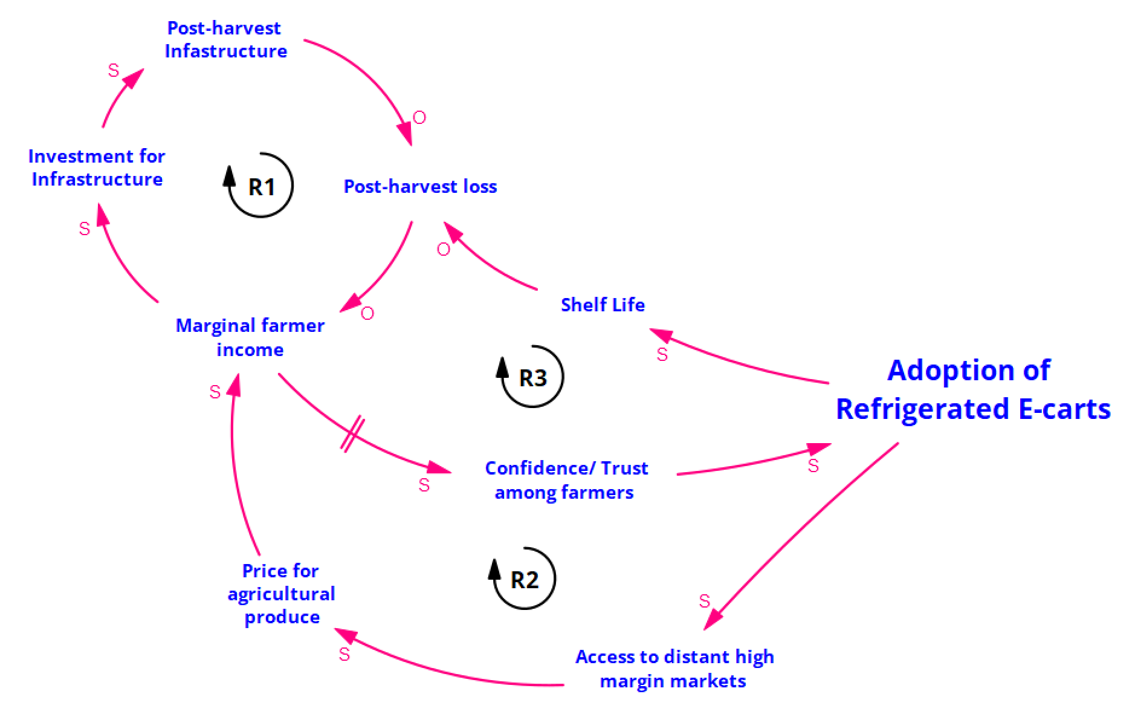 Figure 2. Pilot Intervention: Strengthening Market Access and Shelf-Life Dynamics
The Friction in the System
While the intervention creates strong reinforcing benefits, the system also generates balancing loops that slow down the rate of adoption (see Figure 3 below). As these e-carts begin operating in rural contexts, they introduce new operational challenges (B1) such as lack of familiarity with EV driving, limited knowledge of charging infrastructure, managing products in the e-carts and operating/selling products in the market. These challenges increase acceptance friction (s); as a result, farmers may hesitate to adopt or fully utilise the technology due to perceived complexity or risk and reduce the rate of adoption (o), creating a balancing effect.
Another bottleneck (B2) highlights that as adoption of e-carts increases, it drives higher demand for charging infrastructure (s). In regions with already constrained energy systems, this increased demand contributes to grid stress (s). Higher grid stress can reduce the reliability and accessibility of charging, which in turn negatively impacts the ease and feasibility of operating e-carts (o). This balancing loop slows further adoption.
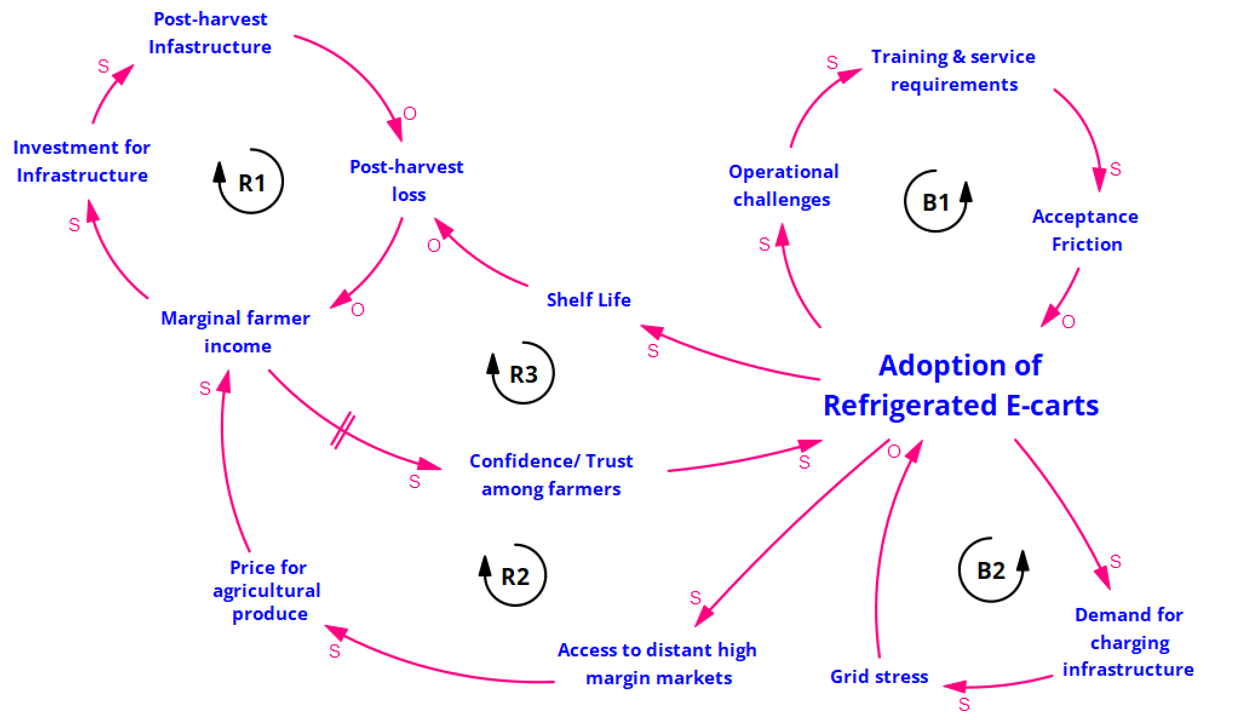 Figure 3. Adoption Constraints: Operational Frictions and Infrastructure Limitations
Building Momentum for Change
To address the complexities highlighted in (B1) & (B2) and enable the scale-up of EV adoption targeted interventions were introduced, as shown in Figure 4. A key focus area was capacity building through training and workshops to equip drivers with the necessary skills and familiarise them with refrigerated e-carts (R4). Initial deployment in rural areas faced operational and training-related challenges; however, increased training and awareness efforts helped to build driver capability and confidence (s). As drivers became more skilled, operational challenges reduced, leading to greater acceptance and adoption of refrigerated e-carts. This, in turn, reinforces a positive cycle, supporting the sustained scaling of the intervention.
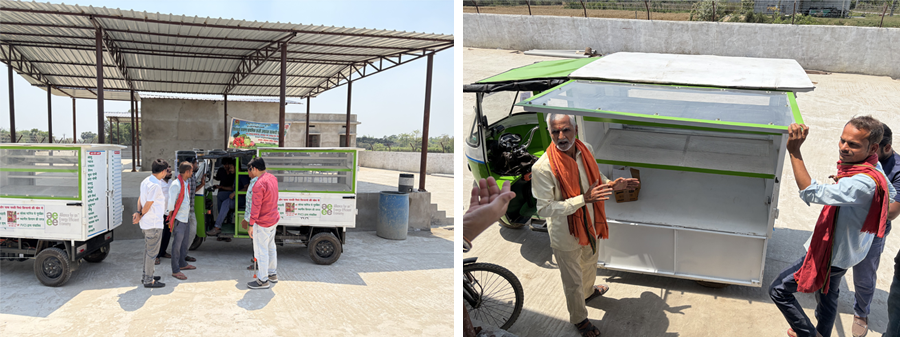 Capacity Building Initiatives: Training and Awareness Programs
Another reinforcing loop (R5) emerges around infrastructure and scalability. As the adoption of refrigerated e-carts increases, so does the demand for charging infrastructure (s). This creates an opportunity to integrate charging solutions with existing solar-powered cold room facilities at PVCSs or installing additional solar panels. Leveraging these decentralised renewable energy assets enhances the feasibility and cost-effectiveness of the model. This integration further increases the farmers’ income, as the solar panels reduce the fuel costs for the vehicle and enable cleaner, renewable-based charging. Currently the Bihar government provide solar panels for cold rooms at subsidised rate. As the model demonstrates success, it becomes more replicable across other PVCSs (s), leading to increased farmer incomes and strengthening trust and confidence among farmers. This, in turn, drives further adoption of refrigerated e-carts and reinforces the continuous strengthening of post-harvest systems.
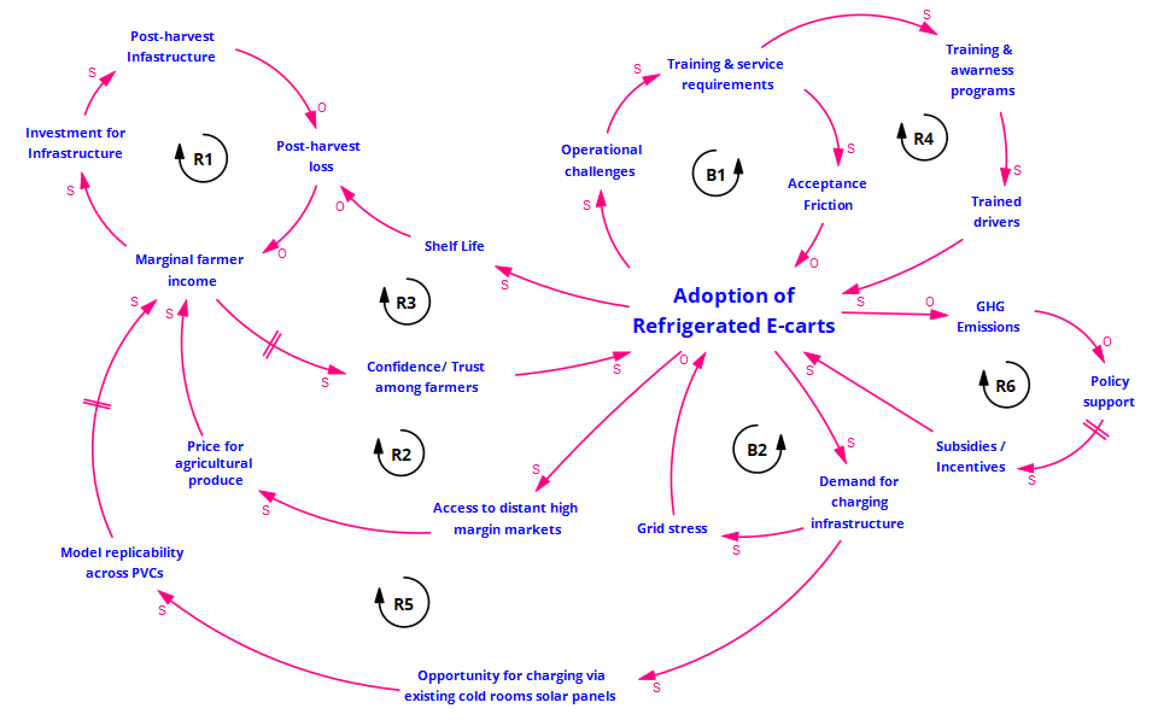 Figure 4. Scaling Mechanisms: Skills, Infrastructure, and System Expansion
As this pilot scales up in near term, this will contribute to reducing greenhouse gas (GHG) emissions (R6), while simultaneously improving food safety outcomes. Conventional three-wheeler vehicle emissions are estimated at approximately 3.38 tonnes of CO₂ annually, compared to about 1.77 tonnes for the e-cart (considering the current coal-based electricity mix), resulting in savings of around 1.61 tonnes per vehicle per year. [7] With solar-based charging, these emissions can be further reduced to near zero. These benefits position the intervention in alignment with broader sustainability goals and Bihar’s ongoing push towards electric mobility and solar-based cold chain infrastructure. As adoption grows, this alignment is likely to attract stronger policy backing, which in turn incentivises further uptake (s), reinforcing the cycle and accelerating the transition towards a more efficient and sustainable post-harvest supply chain.
This momentum is supported by a conducive policy environment at both national and state levels. At the national level the Government of India supports the global EV30@30 initiative, aiming to achieve at least 30% electric vehicle share in total new vehicle sales by 2030. In alignment with this goal, the Government of Bihar has introduced the Bihar Electric Vehicle Policy 2023 to accelerate EV adoption and to expand charging infrastructure across the state. [8]
Complementing this, the Department of Agriculture, Government of Bihar, has issued a notification outlining state schemes for horticultural development. The initiative focuses on the construction of new cold storage facilities, installation of solar panels in existing units, and the establishment of solar-based micro cold rooms. Under the Solar-Based Micro Cold Room scheme (10 metric tonnes capacity), a unit cost of Rs.25 lakhs has been allotted, with a subsidy of up to 50%, (maximum Rs.12.5 lakh per unit). The scheme is open to farmers, farmer groups, entrepreneurs, Farmer Producer Organizations (FPOs), and Farmer Producer Companies (FPCs). [9]
Currently, the intervention operates across the “cold room to market” segment, strengthening temperature-controlled transport and at-market operations, while also directly and indirectly informing policies that can support the development of a complete, end-to-end cold chain ecosystem. In doing so, it also contributes to enabling the cold chain at large by creating awareness among farmers about optimal storage practices and the importance of maintaining the right temperatures. Together, these policy measures create an enabling ecosystem that not only supports the current pilot but also enhances its scalability, reinforcing long-term adoption and systemic transformation.
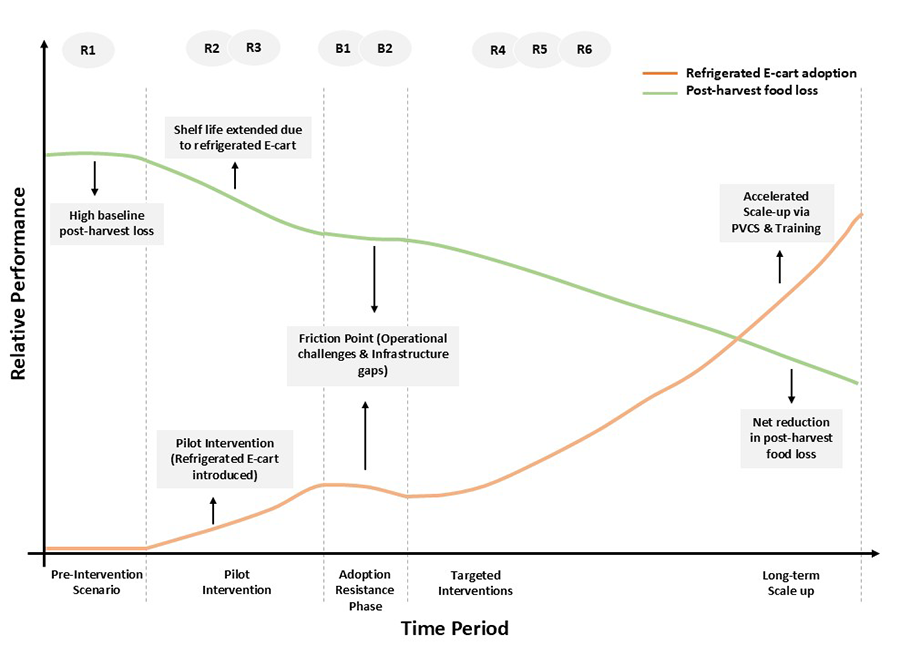 Figure 5. Behaviour Over Time: Transition Toward a Scaled, Sustainable System
The above graph illustrates (Figure 5) the behaviour over time of the pilot intervention and its potential to scale through targeted actions. It captures how initial constraints gradually give way to reinforcing gains as adoption increases, efficiencies improve, and supporting systems evolve.
Taken together, these interconnected loops illustrate how a single, well-designed intervention can address the persistent challenge of post-harvest food losses while reshaping the broader system. What begins as a localized solution to reduce spoilage and inefficiencies evolves into a wider transformation, improving market access, strengthening cold chain utilization, and enhancing environmental sustainability. Crucially, by minimizing post-harvest losses, farmers can avoid distress sales and achieve improved price realization, with early observations indicating gains of up to 1.5–2x in select cases. As reinforcing effects build and structural constraints are addressed, the system shifts from chronic loss and vulnerability to resilience and growth. This underscores the potential of such interventions not only to tackle immediate inefficiencies but also to enable long-term, scalable change across the agricultural supply chain.
References:
[1] Government of India, Press Information Bureau, “India’s Resilient Production Systems in Agriculture,” Apr. 4, 2026. [Online]. Available: https://www.pib.gov.in/PressReleasePage.aspx?PRID=2248987®=3&lang=1
[2] Press Information Bureau, Government of India, Economic Survey,”[Online]. Available: https://www.pib.gov.in/PressReleasePage.aspx?PRID=2034943®=3&lang=2
[3] NABARD Consultancy Services Pvt. Ltd. (NABCONS), Study to Determine Post-Harvest Losses of Agri Produces in India, Ministry of Food Processing Industries (MoFPI), Government of India, New Delhi, India, 2022.
[4] Press Information Bureau, “Income of Farmers,” Ministry of Agriculture & Farmers Welfare, Government of India, Dec. 16, 2022. [Online]. Available: https://www.pib.gov.in/PressReleasePage.aspx?PRID=1884228®=3&lang=2
[5] Ministry of Statistics and Programme Implementation, Government of India, “Annual Report, Periodic Labour Force Survey (PLFS), 2023–24. Available: https://dge.gov.in/sites/default/files/2025 05/Annual_Report_Periodic_Labour_Force_Survey_23_24_0.pdf
[6] Bihar State Vegetable Processing and Marketing Co-operative Federation Ltd., “PVCS Structure,” Tarkaari Portal. [Online]. Available: https://www.tarkaari.in/Stracture_3.html.
[7] NITI Aayog, “CO₂ Emissions Calculator,” e-AMRIT Portal. [Online]. Available: https://e-amrit.niti.gov.in/co2-calculator
[8] Government of Bihar, “Bihar Electric Vehicle Policy Dashboard and Services,” Transport Department. [Online]. Available:
https://odtransportmis.nic.in/EVBihar/#/dashboard/service-info
[9] Agriculture Department, Government of Bihar,” Notification No. NHM/BHDS/266/2023, Jan. 30, 2024. [Online]. Available: https://horticulture.bihar.gov.in/MainSite/Downloads.aspx
Disclaimer: The opinions expressed in this article are those of the authors and do not purport to reflect the views of AEEE
This blog is written by Anmol Jain, Senior Research Associate, AEEE