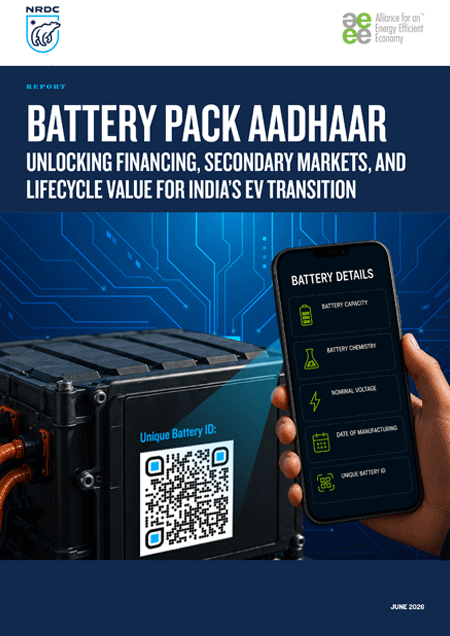
Battery Pack Aadhaar
India’s transition to electric mobility is a critical pillar of its broader decarbonization and energy security strategy. However, despite strong policy support and increasing market momentum, the adoption of electric vehicles (EVs) continues to face structural barriers. A key constraint is the absence of a transparent and standardized battery data ecosystem. Batteries, accounting for a substantial portion of EV cost, play a decisive role in determining performance, safety, resale value, and end-of-life (EOL) potential. As a result, the EV adoption rate in India remained relatively low at just 8.24% in the financial year (FY) 2025-26.
Building on the key learnings from our research, we have undertaken extensive stakeholder consultations with over 20 industry stakeholders including OEMs, financing institutions, recyclers, civil society organizations and battery service providers, to identify the key challenges across the EV ecosystem. Furthermore, we have proposed evidence-based recommendations to strengthen the ecosystem for achieving battery circularity in the country. This report highlights that limited visibility into battery health, usage patterns, and composition has cascading impacts across the EV ecosystem. It constrains access to affordable financing, limits risk assessment for insurance, weakens secondary markets, and restricts efficient reuse, repurposing, and recycling of batteries. In this context, India’s proposed Battery Pack Aadhaar system guidelines present a transformative opportunity to establish a digital backbone for battery traceability and enable a circular battery economy.

